Pocket and Instapaper were both founded in 2007 and 2008. They've been competing for the same user for nearly two decades. Refloat launched in 2026 with a different assumption about what the problem actually is.
This comparison won't tell you that one app is "better." Each solves a slightly different version of the read-later problem. The question is which version you have.


What Pocket does well
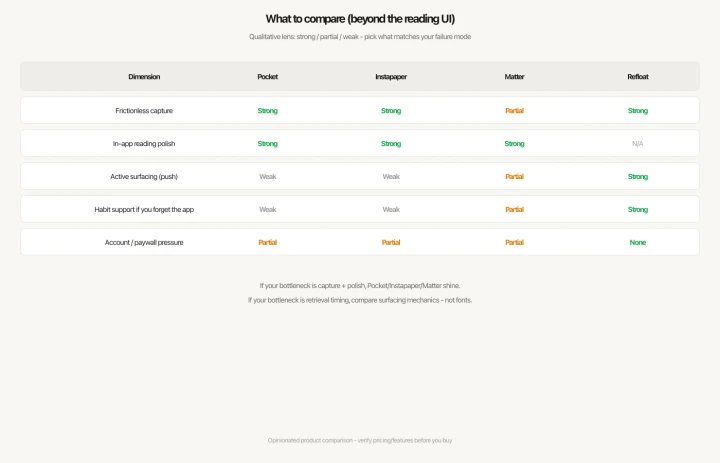
Pocket is the most-used read-later app by a significant margin. It has a polished reading view, reliable offline sync, a browser extension for every major browser, and 15+ years of product refinement. The free tier is genuinely useful — unlimited saves, keyword search, and a recommended reading feature that surfaces popular articles from the Pocket network.
Pocket's biggest strength is also its basic flaw: it's built around a list. The list is clean, sortable, and searchable. But it still requires you to open the app, decide to scroll it, and choose something to read. Nothing in Pocket's architecture pushes content to you.
Pocket Premium ($44.99/year) adds permanent library archiving and full-text search across the entire Pocket index. Useful for power users. Doesn't affect the surfacing problem.
What Instapaper does well
Instapaper has the best reading experience in the category. Clean typography, adjustable font and size, night mode, and a speed-reading mode for people who want to push their reading rate. It handles paywalled content better than most apps. The highlight and note system is well-designed and exports to Readwise if you use spaced-repetition review.
The free tier limits highlights to 5 per article and doesn't include full-text search. Instapaper Premium is $29.99/year.
Like Pocket, Instapaper is fundamentally a passive list. Content goes in. Nothing comes back out unless you retrieve it. If you already have a daily reading practice and check your list every morning, Instapaper rewards the habit with a better interface than any other app in this comparison. If you don't, Instapaper won't help you build one.



What Refloat does differently
Refloat doesn't have a reading view. Articles open in your default browser. If a polished reading environment is important to you, Pocket or Instapaper do that better.
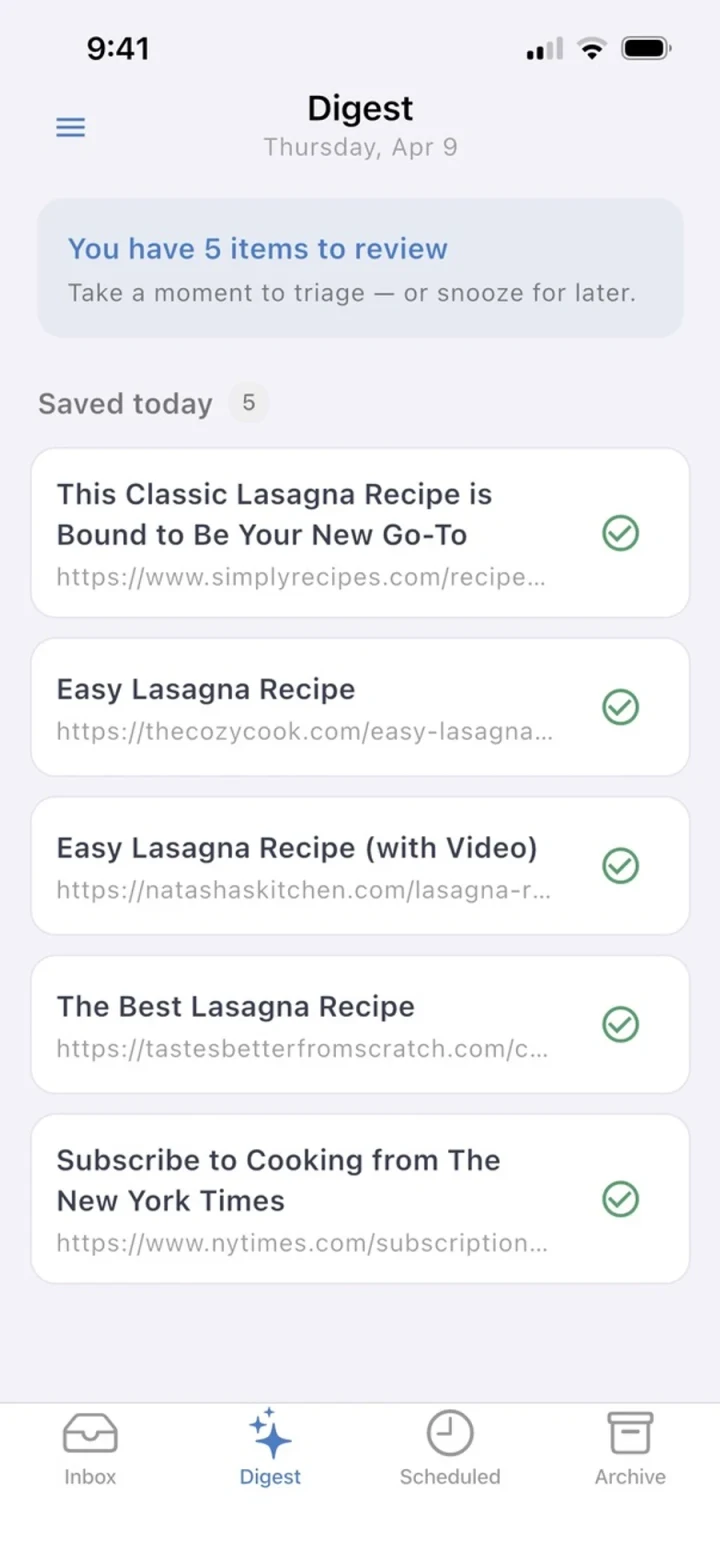
What Refloat has that neither of the others do is an active surfacing layer. You define a reading window — the daily time range when you're available to read — and Refloat sends a digest of your saves during that window. The content arrives when you're ready for it, not when you happen to remember the app exists.
Capture is also faster. The share-sheet screen shows a single decision (which time preset) and requires no typing. The app extracts the title and saves immediately. The entire flow takes under three seconds.
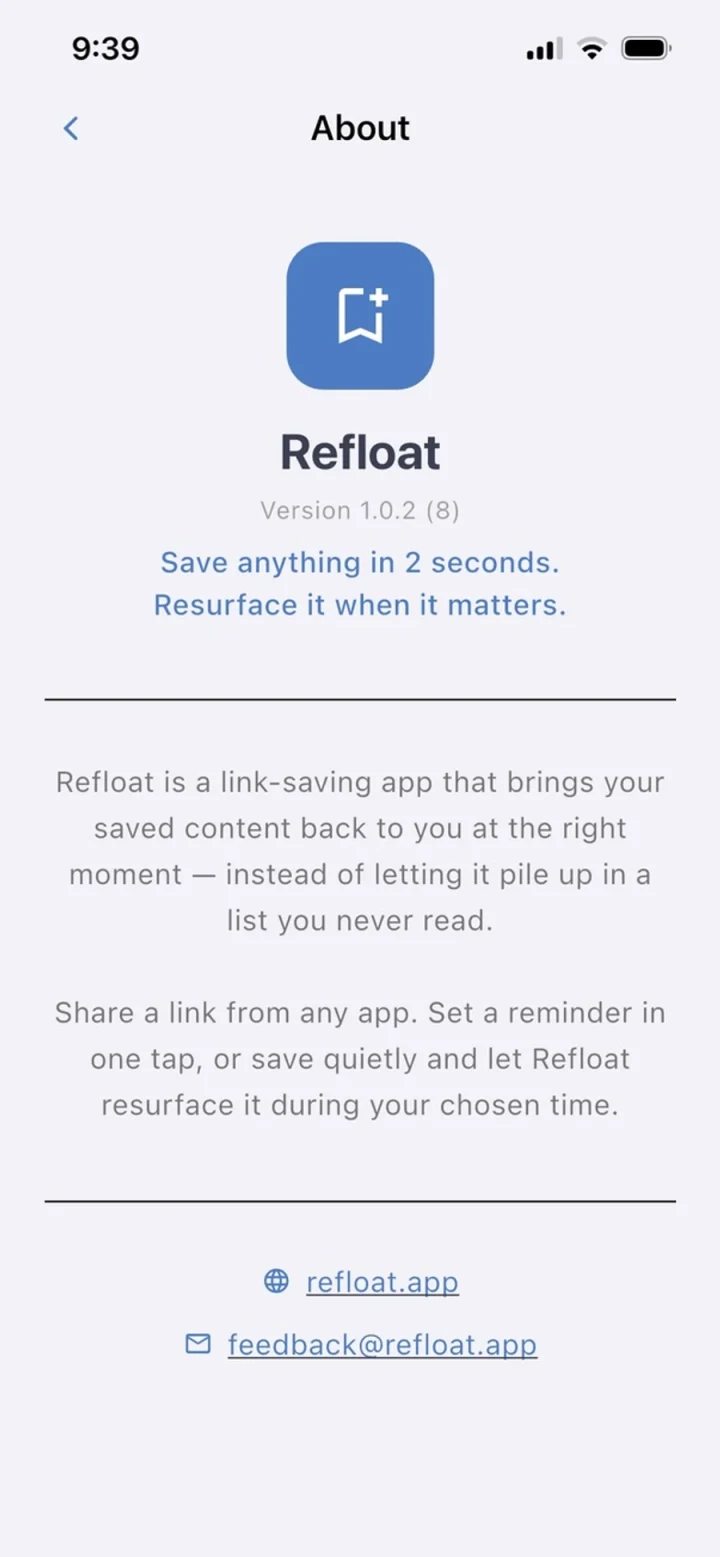
Refloat requires no account and has no paid tier. It's currently iOS and Android only.
The core difference in model
Pocket and Instapaper are built on the premise that you'll go back to your list. Their entire product design assumes you have a browsing habit — that you'll open the app, scroll through what you've saved, and pick something.
Refloat is built on the premise that you won't. That most people save things during moments of browsing and don't have a separate habit of browsing their saves. The surfacing mechanism exists to bridge that gap.
If you already read from Pocket regularly, switching to Refloat will probably make your experience worse — you'll lose the reading view and gain nothing you didn't already have.
If you have a Pocket or Instapaper backlog that's grown past the point of usefulness, that's the signal that the passive-list model doesn't fit how you save. That's who Refloat was built for.
Quick summary
Use Pocket if you want the most complete free read-later app with good offline reading and are willing to form a habit of opening it.
Use Instapaper if reading experience and annotations matter — you highlight, take notes, and already read from your list every day.
Use Refloat if you save more than you read, your backlog creates guilt rather than value, and you want the app to bring articles to you instead of waiting to be opened.