At some point, the Pocket backlog stops feeling like a reading list and starts feeling like a to-do list you've been ignoring for two years. Every article you saved was a small promise to your future self: I'll get to this. At 300 items, those promises weigh something.
The average Pocket user has 340+ articles saved. The average number read per month: two. That means most of what gets saved is never opened again.
If you're here because your backlog has grown past the point where scrolling through it feels useful, this is for you.


Why the backlog keeps growing
Saving is frictionless. Most read-later apps have a share-sheet extension or browser button, and saving a link takes one tap. Reading takes 10 minutes and a quiet room.
The mismatch is structural. You save during moments of passive browsing — on public transit, waiting for something, between tasks. Those are not reading moments. The article goes into the list, and the list grows faster than you empty it.
The guilt compounds the problem. Once a backlog feels overwhelming, you avoid looking at it. New saves pile on top. Eventually the app disappears from your home screen.
The case for deleting the backlog
Counterintuitive, but useful: delete everything saved more than three months ago. All of it.
Anything that mattered, you would have read by now. Anything that still matters, you can find again if you search for it. A 2023 article about productivity frameworks has not appreciated in value while sitting in your Pocket queue.
Deleting the old backlog removes the guilt. You're not abandoning the articles — you're acknowledging that the version of you who saved them had different intentions than the version of you reading this now. That's fine. Forgive the backlog and start from zero.
What to do with the remaining articles
For anything saved in the last three months, do a triage pass. Open the app. Spend 60 seconds on each item:
- Still interested? Keep it and schedule 20 minutes to read it this week. Put it in your calendar like an appointment.
- Vaguely relevant but not urgent? Delete it. The urge to keep things "just in case" is what built the backlog in the first place.
- Unsure what it even is? Delete it. If you can't remember why you saved it, you won't read it.
Triage should take under 20 minutes for most people. The goal is a list short enough to see in one screen.



Stopping the next backlog from forming
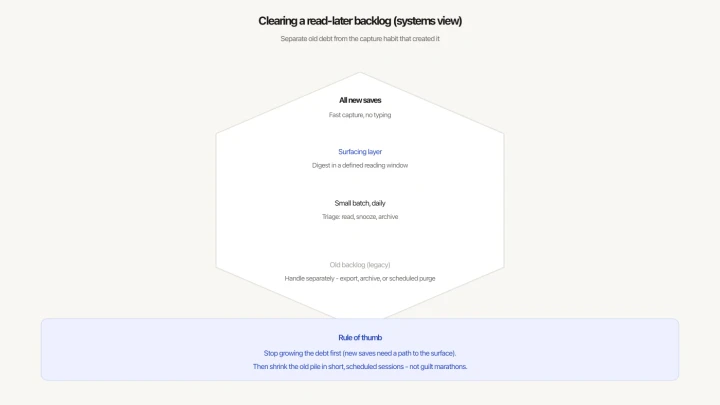
Clearing the current backlog fixes the symptom. The underlying problem is the saving habit without a corresponding reading habit.
Two changes help:
- Raise the bar for saving. Before you save something, ask: would I read this in the next 48 hours if it were put in front of me at the right time? If the honest answer is no, don't save it.
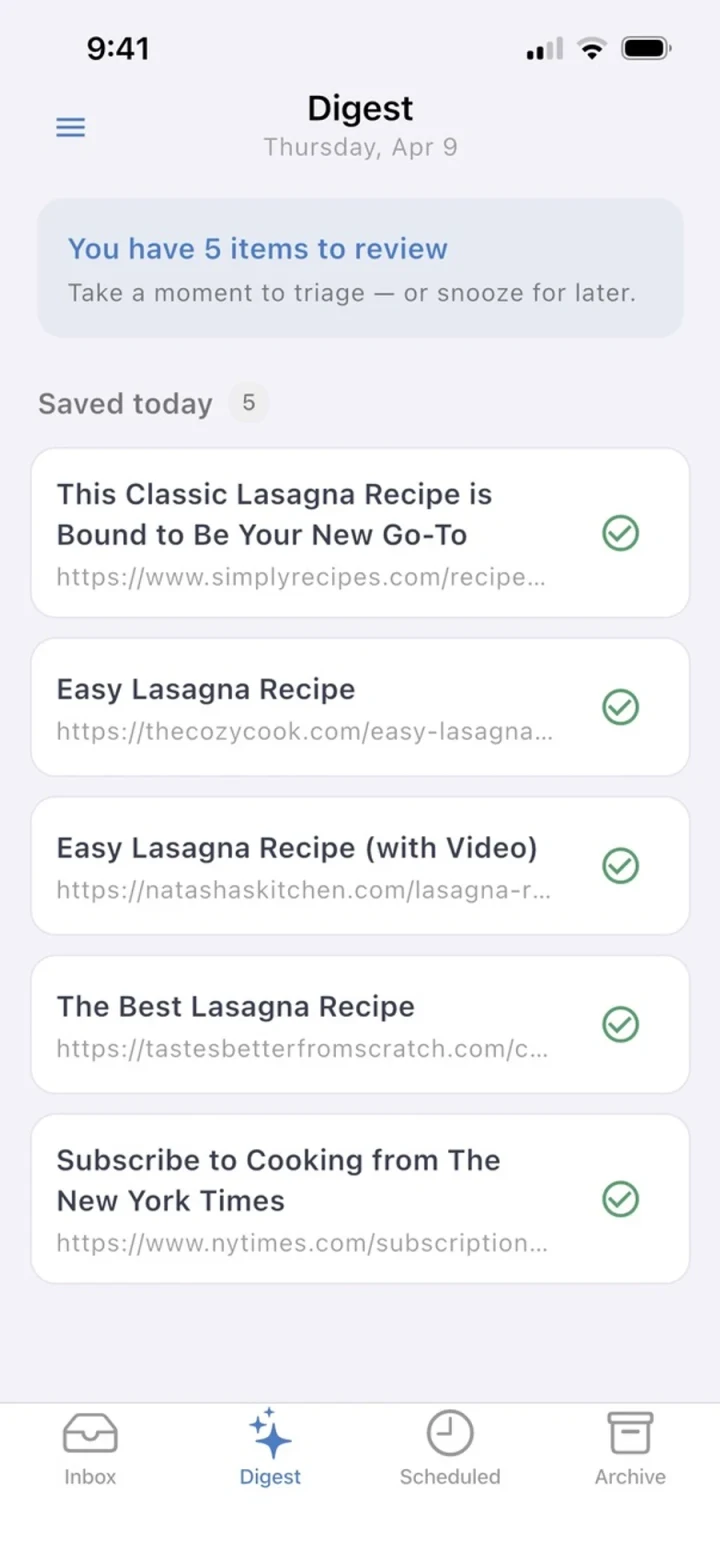
- Get a system that surfaces what you save. Pocket's model is passive storage — it waits for you to come back. Refloat's model is active delivery: you define a daily reading window, and each morning a digest arrives with what you've saved. The app comes to you, not the other way around.
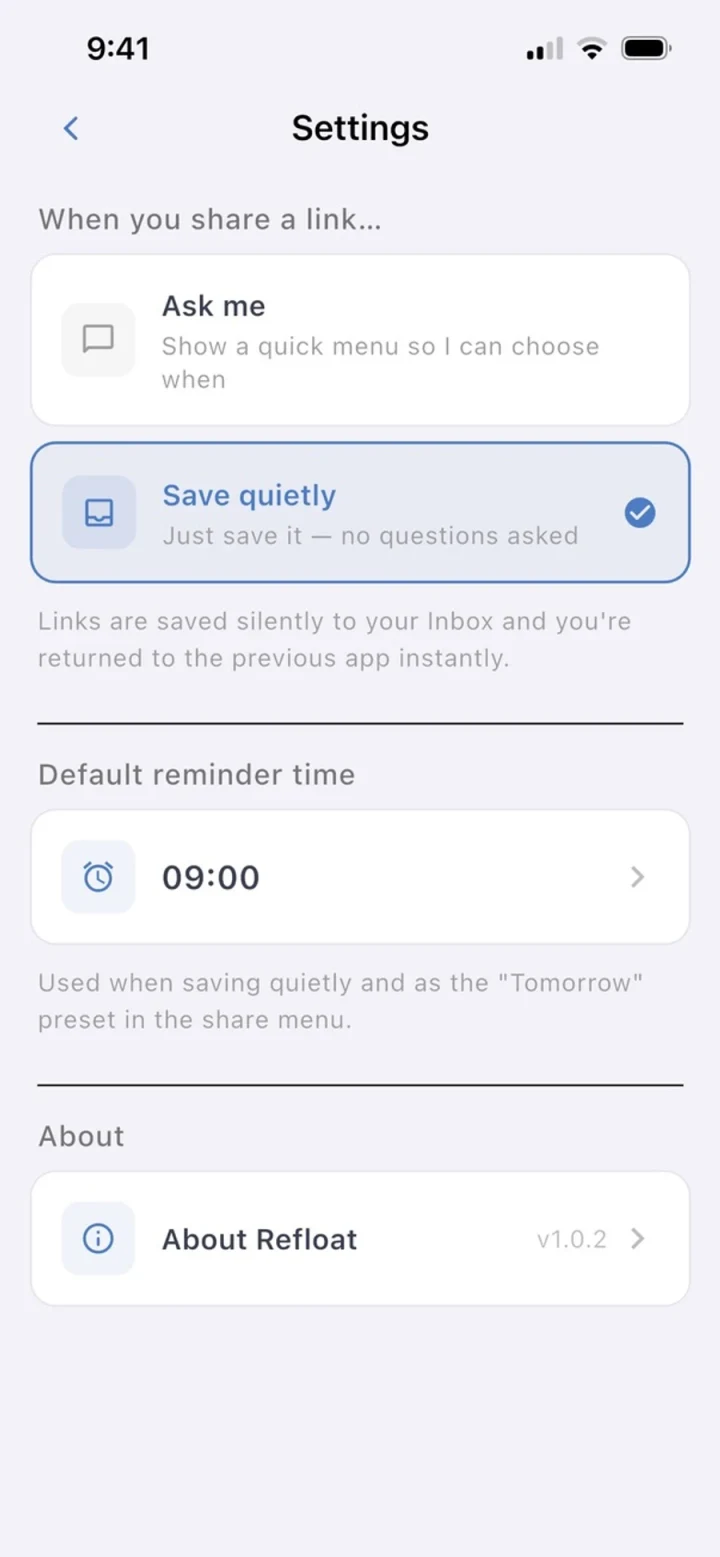
The reading window is the key piece. You pick a time range — morning commute, lunch, evenings — and Refloat sends the digest only then. No random interruptions, no pressure to open the app throughout the day.
Starting fresh
You don't need to import your Pocket backlog into Refloat. That just moves the problem. Start fresh: clear the backlog, then save the next link you actually want to read.
The next morning, the digest arrives. You read one article during your window. The backlog stays at zero. That's the habit.