
Every year, a significant number of people write "read more books" or "read more articles" in their resolutions. Within a month, most have abandoned the goal.
This is not a character failing. It's a design problem. "Read more" is an intention without a mechanism. It has no cue, no defined routine, and no place in the day. Good intentions that live only in your head tend to die there.
Habits work differently. They attach to existing behavior and reduce the number of decisions you need to make. The reading habit that sticks is the one that runs on infrastructure.


Why implementation intentions work
Psychologist Peter Gollwitzer's research on "implementation intentions" — the if-then structure of planned behavior — shows that stating specifically when, where, and how you'll do something roughly doubles follow-through rates compared to just stating an intention.
"I will read more" is an intention. "I will read one article when I sit down on the train at 8:10am" is an implementation intention. The second version has a cue (sitting on the train), a location (the train), and a defined behavior (one article). It doesn't require a separate decision at 8:10am — the situation triggers the action.
The reading habit works the same way. The question is not whether you want to read more, but what will prompt you to do it at the right moment.
The problem with "I'll check my saved articles"
Most people who use read-later apps intend to browse them regularly. In practice, "I'll check my reading list" has the same problem as "I will read more" — it's an intention without a fixed cue.
The app doesn't send a notification. It waits. You have to remember it exists, decide to open it, scroll a list, and pick something. At the moment you might have five minutes to read, this process often takes longer than five minutes.
The result: the reading list grows, the habit never forms, and the app eventually vanishes from regular use.
Why email newsletters get read
Here's a useful comparison. Email newsletters consistently get read at higher rates than read-later apps. The open rates for good newsletters sit between 30–50%. The "read rate" for Pocket articles is probably under 10%.
The difference isn't content quality. It's delivery structure. Newsletters arrive at a specific time, in a specific place (your inbox), with a subject line that triggers a decision. The cue is built into the system.
The best newsletters you follow arrive on the same day each week, at roughly the same time. You've built a micro-habit around opening them because the pattern has been consistent enough to become automatic.



The daily digest as a habit scaffold
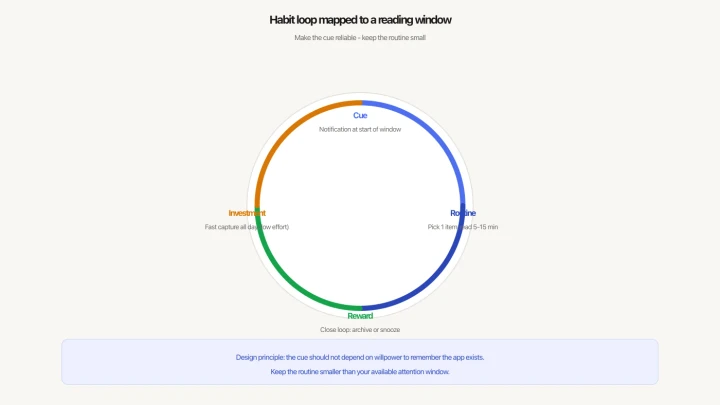
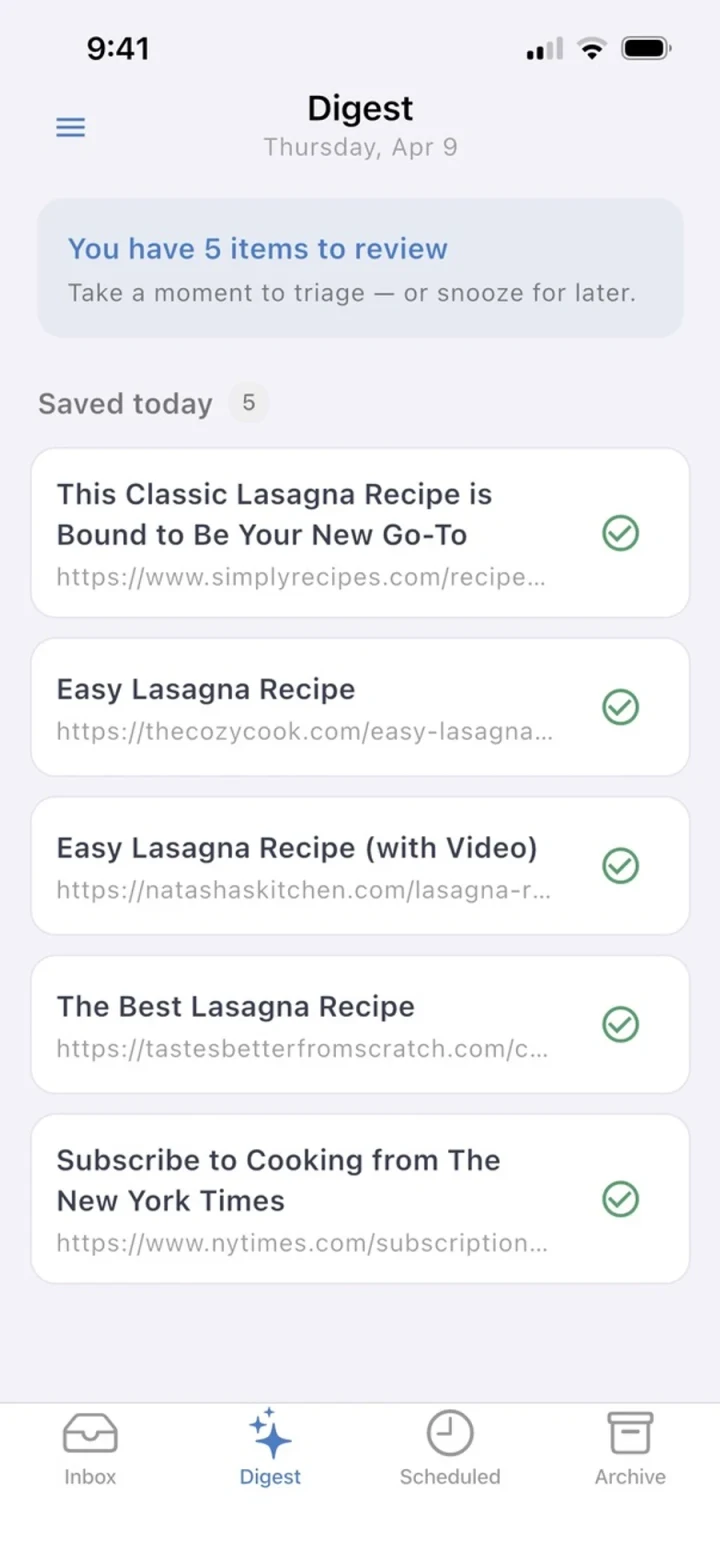
A daily digest gives saved articles the same structural advantage as a newsletter. It arrives at a defined time (your reading window), in a defined channel (push notification), with a defined action available (tap to open one article).
This is the cue in the habit loop. The routine is opening one article from the digest during a natural reading window — a commute, a lunch break, the 20 minutes before bed. The reward is the feeling of having read something relevant, something you chose because it interested you when you saved it.
The key difference from "I'll check my reading list" is that you don't have to decide to do it. The notification arrives. The decision has already been made.
How to set this up with Refloat
Refloat implements the daily digest model for saved links. Setup takes about two minutes:
- Install Refloat on iOS or Android. No account required.
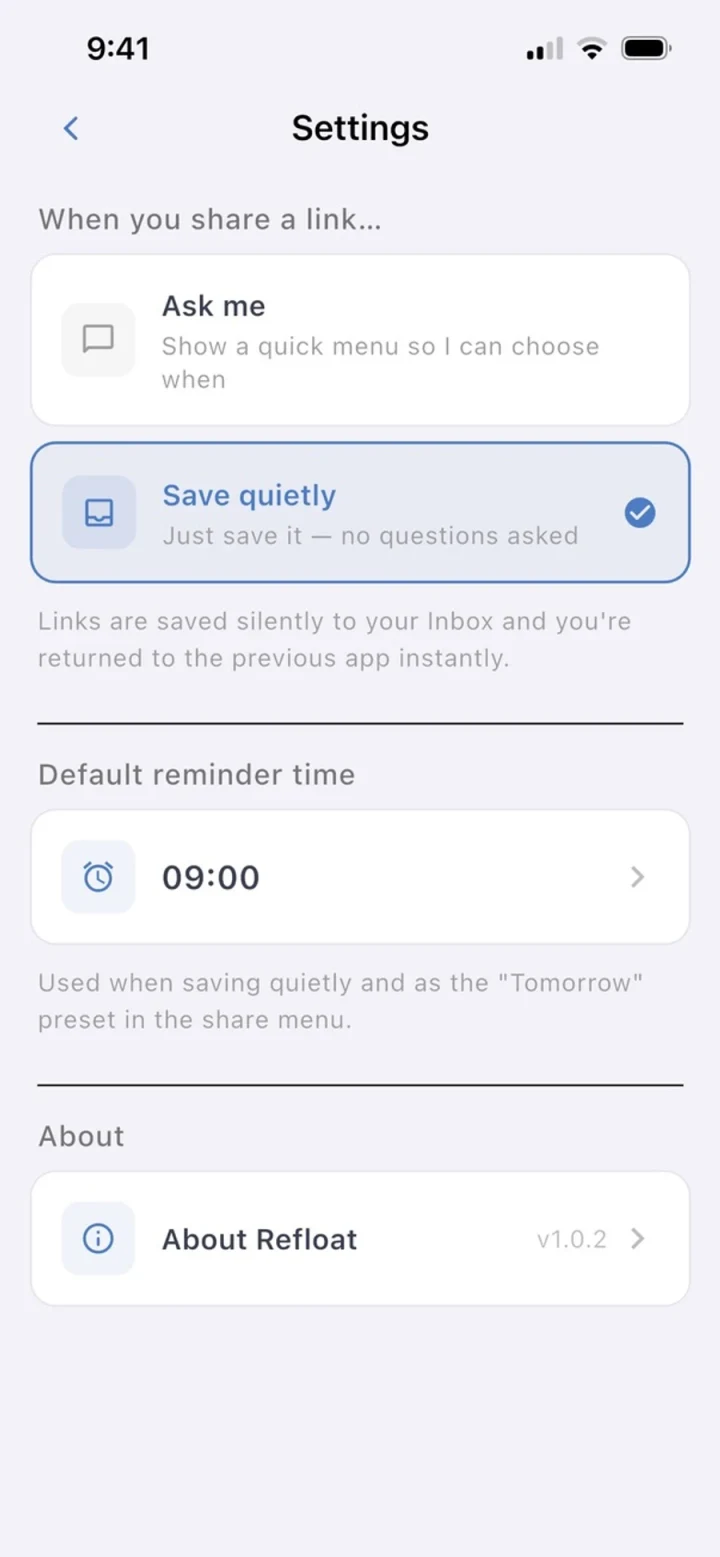
- Set your reading window. This is the time range when you're realistically available to read — commute hours, a lunch break, evening. Pick a window you actually have, not an aspirational one. The digest arrives at the start of this window.
- Save your first link. Use the share sheet from any app. The capture takes under three seconds.
The next morning (or at the start of whichever window you chose), the digest arrives. Open it, pick one article. That's the habit.
How long before it feels automatic
Research by Phillippa Lally at UCL found that habit formation takes anywhere from 18 to 254 days depending on the behavior and the person, with the median around 66 days. For a low-effort behavior like opening a notification and reading one article, the lower end is more likely.
Two weeks of consistent digests is usually enough to establish the pattern. The cue (notification at your window) becomes associated with the routine (reading) without active effort on your part.
One practical note: keep the reading window honest. If you set it to 6:00am but you're not functional at 6:00am, the digest arrives and gets dismissed. Pick the window where you're actually present and willing to engage with something.